
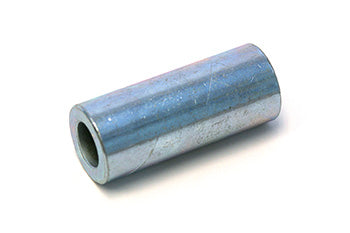
Product Description
WW PM-16F is an exit roller for Dayton manual pallet jacks, designed for the 3KR84 model. Constructed with a high-impact polymer tread over a steel core and precision-sealed ball bearings, it supports a load capacity at a load center. Engineered for direct replacement, it conforms to dimensional and material standards for compatibility and longevity.
Compatibility: Fits pallet jacks made by Dayton, model 3KR84. SKU: WW PM-16F
Specifications
Material & Construction
| Roller Material | Machined steel alloy core with high-impact polymer outer tread |
| Hardness | Brinell 180 (polymer tread) |
| Construction | Precision-sealed ball bearings |
Part Identification
| Part Number | WW PM-16F |
| Type | Exit Roller, Direct Replacement |
| Compatible Equipment | Dayton 3KR84 manual pallet jack |
Frequently Asked Questions
Q: What is the WW PM-16F and what does it do?
A: The WW PM-16F is an exit roller for Dayton manual pallet jacks, model 3KR84. It features a steel core with high-impact polymer tread and precision-sealed ball bearings, enabling smooth pallet movement during loading and unloading operations.
Q: What are the physical dimensions of the WW PM-16F?
A: The WW PM-16F has a , , and , designed to fit standard manual pallet jack configurations.
Q: What is the load rating for the WW PM-16F?
A: The WW PM-16F supports a load capacity at a load center on the Dayton 3KR84 pallet jack when properly maintained and used within manufacturer specifications.
Q: What materials are used in the WW PM-16F?
A: The WW PM-16F is constructed from a machined steel alloy core with Brinell 180 hardness rating, combined with a high-impact polymer outer tread. The design provides wear resistance and impact protection for sustained warehouse use.
Q: Which equipment is the WW PM-16F designed for?
A: The WW PM-16F is a direct replacement roller engineered for Dayton model 3KR84 manual pallet jacks. Verify your equipment model before ordering to ensure compatibility.
Q: How should the WW PM-16F be maintained?
A: Inspect the roller regularly for flat spots, cracking, or tread separation. Ensure the bearing rotates freely without drag or resistance. Keep the roller clean and free from debris. Replace if damage is visible or rotation becomes restricted. Lifespan depends on load intensity and floor surface conditions.

